

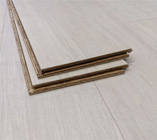
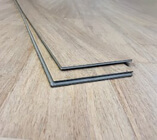






6.5 inch Sample
In cart
$2.00
15 inch Sample
In cart
$6.00


 0
 0
Quiet, warm and easy on your feet: our engineered click-lock cork flooring pairs a 2.5 mm high-density cork top layer with an ultra-realistic wood-grain surface and our DURAMAX® Hard-Wearing Surface Finish, from $6.37/sq ft. See it in your own light with a 6.5" sample for $2 or a 15" sample for $6.
Showing 9 products


Quiet, Warm and Easy on Your Feet.
Cork flooring is made from the bark of the cork oak tree, the same material that seals a bottle of wine. That bark is packed with millions of tiny air-filled cells, and those cells are the secret behind everything people love about cork floors: they cushion your step, soak up sound and hold onto warmth.
Our engineered cork planks put that natural cork to work in a modern, wide-plank format. A 2.5 mm high-density cork top layer carries an ultra-realistic printed wood grain, a stable HDF core gives each plank its strength and click-lock edges, and a cork underlay on the back quiets every step. You get the look of a wood floor with the comfort and calm of cork.
Did you know? Cork oaks are never cut down for cork. The outer bark is stripped by hand, the tree grows a new layer, and the same tree is harvested again roughly every nine years. More than 80% of what goes into these planks is renewable cork and wood, and about 30% is recycled cork and wood by-products.
Not Your Grandparents’ Cork
Conventional cork floors usually look like cork, with that speckled corkboard texture, and they often come as tiles that are glued down. These engineered planks look like a wide-plank wood floor, click together without glue and float over the subfloor, with four layers working together.

Plank layers, top to bottom (10.5 mm in total)
A high-performance polyurethane coating, applied hot at the factory and sealed with a low-VOC waterborne lacquer. It is built for very high wear, impact and stain resistance and holds up past 7,000 revolutions in abrasion testing (EN 14354), so shoes, paws and dragged chairs meet a tough, even shield across every plank.
High-density cork (over 550 kg/m³) printed with a high-definition wood visual, then embossed with a real wood-grain texture you can feel. Micro-beveled edges on all four sides make the planks read as individual boards.
A 6.5 mm high-density fiberboard core, pre-treated for moisture resistance, keeps each plank flat and stable, and every edge is sealed all the way around. Its machined click-lock joints snap together without glue, which makes this one of the easiest floors to install yourself.
An acoustic cork layer with built-in antimicrobial protection is bonded to the back of every plank. It cuts impact noise by 18 dB, so you don’t need (and shouldn’t add) a separate foam underlayment.
Compare floor types
| Features | This collectionAmbient® wood-look corkEngineered, click-lock | Solid hardwoodTongue and groove | Traditional cork tilesUsually glue-down |
|---|---|---|---|
| Look | Wide-plank wood grain | Natural wood grain | Speckled cork texture |
| Feel underfoot | Cushioned and warm | Hard | Cushioned and warm |
| Footstep noise | Softened by the built-in cork underlay (18 dB impact sound reduction) | Can be loud | Quiet |
| Installation | Clicks together and floats, DIY friendly | Nailed or stapled, usually by a pro | Glued down; some tiles need sealing after install |
| Basements and slabs | Yes, over a moisture barrier | Not recommended below grade | Depends on the product |
| Renewing the finish | Refresh with a maintenance coat; not sanded | Can be sanded several times | Can often be resealed |
If you want a floor you can sand down in 30 years, solid hardwood still has that edge. If you want the wood look with a softer, quieter, warmer feel, and a floor that can go in the basement too, wood-look cork is hard to beat. Still deciding? Browse all Ambient flooring, including strand woven bamboo and engineered hardwood.
Straight Talk on Water, Installation and Care
Everyday spills, wet boots and the dog’s water bowl are no problem when you wipe them up within 24 hours. The planks are suited to kitchens, basements and below-grade rooms. Skip bathrooms, shower rooms, saunas and other damp, steamy spaces; for those, choose a waterproof floor like SPC luxury vinyl or rigid core bamboo.
Acclimate the unopened boxes in the room for 72 hours (up to 7 days in very humid or dry climates) at 64-79°F and 35-65% humidity. The subfloor must be dry, solid and flat within 5/64 in over 5 ft. Lay an 8-mil polyethylene moisture barrier, overlapped 8 in and taped, then click the planks together, leaving a 3/8-5/8 in expansion gap at walls, pipes and door frames. Stagger end joints at least 12 in and fasten baseboards to the wall, never to the floor. The full steps are in the cork flooring installation instructions.
Grit is what dulls any finish, so sweep or vacuum often and put mats at the doors. For a deeper clean, mist a pH-neutral wood and cork floor cleaner onto the mop pad, not the floor. Never use ammonia, bleach, vinegar, wax, oil soap or abrasive cleaners, and never wet-mop or steam-mop. Our cork floor maintenance guide has the details.
Cork is natural and can fade in long, direct sun, so use blinds or curtains on bright windows. Put felt pads under furniture, choose wide, soft chair casters, and lift heavy pieces instead of sliding them. Pick rugs and mats without rubber, latex or vinyl backings, which can stain the finish and trap moisture.
Pro tip: order a 15" sample along with the 6.5" one. The longer piece shows how the grain flows across a plank and lets you try the click-lock joint yourself. When traffic paths start to look dull after a few years, a thin coat of a cork and wood floor maintenance polish brings back the sheen, no sanding needed.
Straight Answers, No Fluff.
No. Our cork flooring is water-resistant, not waterproof. The HDF core is pre-treated to resist moisture, so everyday spills, wet paws and tracked-in snow are fine as long as you wipe them up within 24 hours. Don't install it in bathrooms, shower rooms, saunas or other damp, steamy rooms, and never wet-mop it. For wet rooms, choose a waterproof floor such as our SPC luxury vinyl or rigid core bamboo.
Yes. Cork is a comfortable, forgiving kitchen floor; just wipe up spills within 24 hours and use a breathable rug in front of the sink. In basements and over concrete the planks float on an 8-mil (0.2 mm) polyethylene moisture barrier. New concrete needs to dry for at least 60 days and test at or below 2.0% CM moisture (1.5% CM with radiant heat), as the installation instructions explain.
No. A 1.5 mm acoustic cork underlay is already bonded to the back of every plank, so adding a foam pad brings no real benefit and can make the floor too soft. The only thing that goes underneath is the 8-mil polyethylene moisture barrier, overlapped about 8 inches and taped at the seams.
Yes. These planks are rated for heavy residential traffic (Class 23) and even heavy commercial traffic (Class 33), with residual indentation under 0.25 mm in testing, and the DURAMAX® finish is built for high wear and impact resistance. Like any floor, cork can still scratch or dent, so trim pet nails, use felt pads under furniture and avoid stiletto heels.
Yes. Cork naturally absorbs sound, and the cork underlay built into each plank cuts impact noise by 18 dB in lab testing (EN ISO 10140-3). Footsteps sound softer and you hear far less of the hollow click-clack of hard floating floors, which makes cork a smart pick for upstairs bedrooms, condos and playrooms.
It is noticeably more forgiving and warmer than tile, stone or most hardwoods. Cork's air-filled cells compress slightly under each step and spring back, and they insulate, so the floor never feels cold underfoot. It still feels like a solid floor, not a cushion.
Sweep or vacuum regularly to remove grit. For a deeper clean, mist a pH-neutral wood and cork floor cleaner onto the mop pad and damp-mop, keeping water to a minimum. Never use ammonia, bleach, vinegar, wax, oil soap, solvents or abrasive cleaners, and skip steam mops. Our cork floor maintenance guide has the details.
Yes, over both hot-water and electric radiant heat. Run the system for 3 to 4 days before installing, hold it around 65°F while you lay the floor, and bring it back up gradually starting at least 3 days later. The floor surface must never go above 82°F (28°C). See the installation instructions.
Cork is a natural material and can fade with long exposure to direct sunlight, much like hardwood. The finish is rated 6 on the blue wool light fastness scale, and blinds or curtains on bright, south-facing windows keep the color even.
Ambient cork flooring currently runs from $6.37 to $6.38 per square foot, sold by the box (7 planks, about 17 sq ft). Add about 10% for cuts and waste; our square footage calculator does the math for you. Samples are $2 (6.5 inch) and $6 (15 inch).
Traditional cork tiles are solid cork glued to the subfloor, and some need sealing after they go down. Our engineered click-lock cork planks have a printed cork top layer over a stable HDF core with a cork underlay, so they snap together and float without glue. That means a faster, cleaner install, and you can walk on the floor as soon as it is down.
Cork is harvested by hand from the bark of the cork oak, which grows back, so the tree is never cut down. More than 80% of what goes into these planks is renewable cork and wood, and about 30% is recycled by-products, with no PVC or plasticizers. The floor is GREENGUARD Gold certified for low chemical emissions, and the HDF core is CARB Phase 2 and TSCA Title VI compliant. Learn more on our product safety and testing page.
It isn't sanded like solid hardwood, because the wood-grain visual is printed into the cork. Instead, when busy paths start to look dull, you clean the floor and apply a thin coat of a cork and wood floor maintenance polish, which renews the protective layer and fills fine scratches. A basic strip-and-recoat is only needed rarely.
Yes. These planks are rated Class 33 for heavy commercial traffic (EN ISO 10874), which suits offices, shops and studios that want a quiet, comfortable floor. Contact us for commercial quantities and warranty terms.
Two sizes: a 6.5" sample for $2 and a 15" sample for $6. The 6.5" piece is perfect for comparing colors, while the 15" piece shows more of the grain, the beveled edge and the click-lock joint. Add either size with the sample button on any cork floor, or read our guide to ordering flooring online, from samples to installation.
Ambient cork flooring is backed by our Lifetime Structural and Finish Warranty for residential use, along with our 30-day money back guarantee on flooring orders.
How to Order Flooring Online, From Samples to Installation →