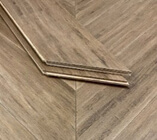
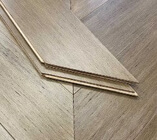
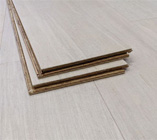
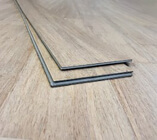
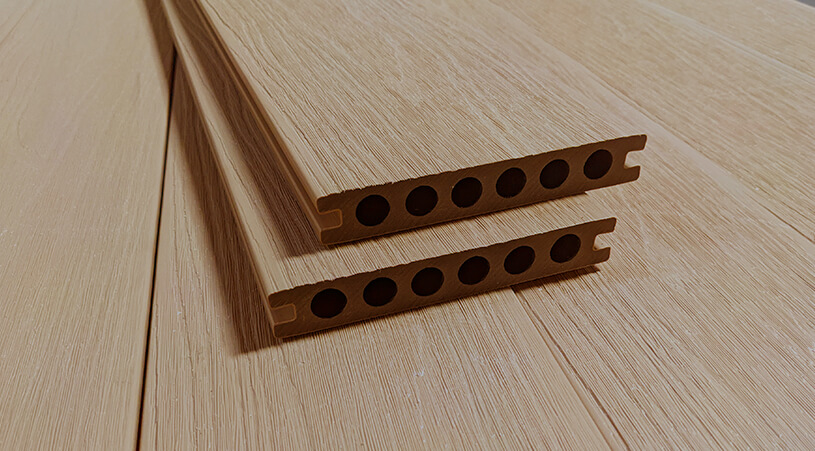
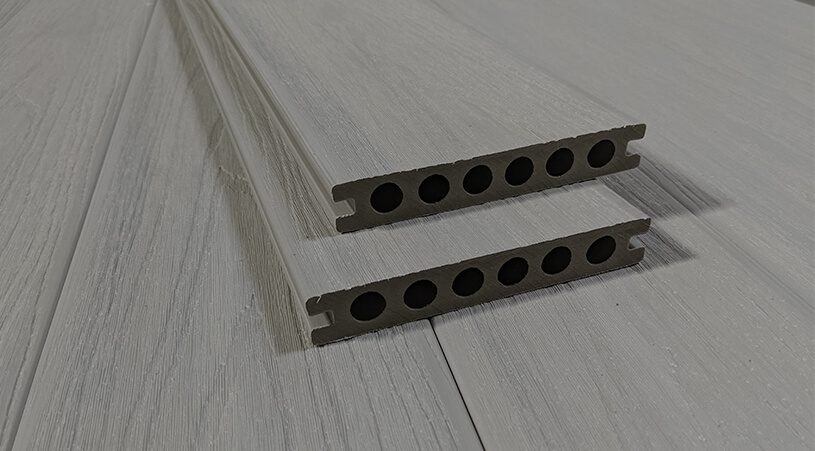
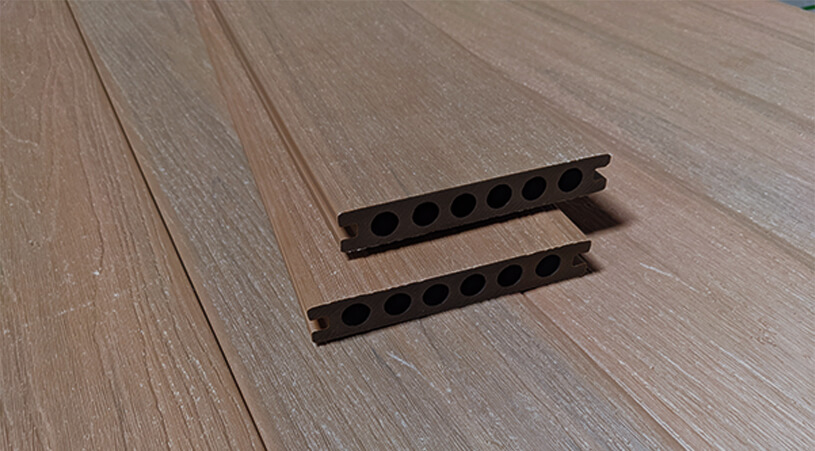

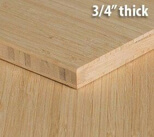
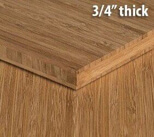












Strand Woven
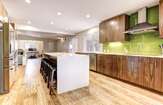
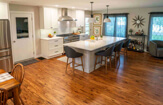
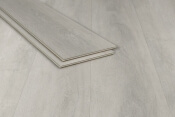
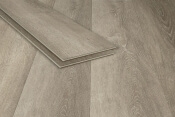
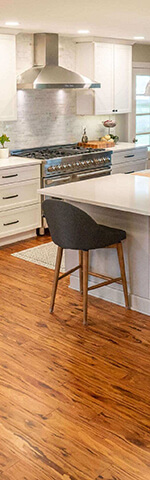
As much as 2-3X harder than oak, these tough floors provide a warm wood look and feel.



 0
0  0
0  Table Of Contents
Bamboo is a recent addition to the flooring scene, only emerging in the mid-90s. To our dismay, there's a lot of misleading information about it online. This is partly because the original versions were less robust than the newer ones.
In 2005, Ambient® became one of the first companies in the world to sell strand woven bamboo flooring. Since then, we've shipped this incredible product to all 50 U.S. states, Europe, Africa, and beyond. We've had the pleasure of serving tens of thousands of homeowners, builders, and architects across the globe.
Over the years, we have amassed a wealth of information about this fantastic flooring material. We're excited to share all of it with you right now in this comprehensive guide. Rest assured that we'll cover everything from the types of flooring to the latest manufacturing techniques and environmental benefits.
If you have already decided to purchase and want to see prices, we recommend exploring our selection of bamboo flooring for purchase.
When it comes to hardwood flooring, bamboo floors stand apart in almost every category.
Strand woven bamboo is the hardest wood on the market (by far) and stands up to pets and kids.
It's made from a rapidly renewable resource, re-harvested every 5 years versus 40-80 years for hardwoods.
It can be refinished at least twice although it's rarely needed in a residential setting.
It's easy to clean, cutting down on allergens and dirt, and comes in waterproof versions, making it great for kitchens.
It has a distinctive and unique marbled grain that is beautiful, inviting, and warm underfoot.
It comes in wide planks and premium lengths and cost $3-$8 per sq ft delivered, about half the price of comparable hardwoods.
Ambient® finishes meet the strictest indoor air standards in the world, such as CARB Phase 2.
It comes in solid, engineered, click-lock, tongue and groove and many more options and can be installed over concrete, in basements, and more.
As you learn about bamboo flooring, it's important to understand how manufacturers make it. Here are the details in a nutshell:
Want to know more? Take a look at how our bamboo floors are made. We make our eucalyptus flooring in much the same way. We use hand-picked raw materials that regenerate in as little as three years.
There are several different types of bamboo flooring on the market. Naturally, each has its own characteristics to consider. There are also different ways to manufacture each of them. Learning about these manufacturing processes can help you choose the best type of bamboo flooring for your project.
When it comes to different bamboo grains, there are three main choices: horizontal, vertical, and strand-woven. Each has different characteristics that can help you decide which type of bamboo to put in your home or business.
This type of flooring is made by by cutting and slicing large dried strips of bamboo into smaller ones. The thin strips are then glued together into planks. Finally, they're pressed together using non-toxic adhesive, and glue.
Since bamboo is naturally light in color, sometimes the strips are stained to make them darker. Additionally, some go through a process of carbonization. Carbonized bamboo is softer but helps achieve a darker color if needed.
Horizontal bamboo commonly shows traces of the bamboo nodes. Hence, this type of floor tends to look the most natural.
Vertical bamboo typically looks a lot like horizontal bamboo. Why? The manufacturing process is similar - both are made by cutting large bamboo stalks into thin strips.
Instead of stacking and gluing the strips in a horizontal direction, however, they're glued together vertically. This vertical orientation hides the bamboo nodes.
Both sustainable and affordable, strand woven bamboo floors are super dense, the result of woven bamboo strands and compression under high heat. The end result is a super tough, dense flooring material.
Strand woven bamboo is very hard - in fact, it exceeds the hardness rankings of most other hardwoods. Its durability and strength make it one of the most popular flooring choices available on the market.
There are six main types of bamboo floors, including:
Learning about different bamboo flooring options will help you choose the best one for your project. You'll also be more apt to avoid installation problems.
If you're looking for durability, we recommend strand woven bamboo; if you're looking for ease of installation, check out floating floors.
Bottom Line: The perfect combination of toughness, beauty, eco-friendliness, and affordability. You can choose to nail or glue it down (even on concrete), and there are no run limits. If you have kids or pets, it will hold up great, and you can use it in kitchens. Plus, it's available in premium wide planks at a fraction of what you'd pay for traditional hardwoods.
*A "run" refers to the consecutive distance the floor extends in any given direction
**Opening the windows in your home for a full day is okay.
Bottom Line: Floating solid wood floors tend to generate a lot of complaints about shrinkage. So homeowners should only install them in homes with very stable humidity. If you prefer a floating floor, we recommend using engineered bamboo flooring (not solid). These floors have a much higher dimensional stability and aren't nearly as susceptible to variations in humidity.
*A "run" refers to the consecutive distance the floor extends in any given direction.
Bottom Line: If you want to float a hardwood floor, engineered click lock bamboo is the way to go — it's tough, beautiful and easy to install. We recommend choosing an engineered floor with a minimum 2mm wear layer and high-quality 3-in-1 underlayment that has a high STC sound rating. The final product will look and feel exactly like a solid hardwood when you walk on it.
Bottom Line: Technically, this is an engineered floor due to its multi-layered design. However, it's different enough to warrant its own category! Here's why: it's highly water resistant, exhibits little to no expansion and contraction, and has an acoustic Ambient® vapor barrier pad.
Plus, you can install it directly on concrete or any other level surface as long as it's not too wet*. This floor is strong, comfortable, and durable, thanks to its stone polymer core and thick 40 mm wear layer.
* 'Excessively wet' is defined as emitting moisture > 20 lbs per sq ft as determined by a calcium chloride test . This usually includes a very small percentage of sub-floors. In these cases, you’ll first need to lay down a plastic vapor barrier sheet or something similar.
*A "run" refers to the consecutive distance the floor extends in any given direction.
**Opening the windows in your home for a full day is okay.
Bottom Line: Just like click lock engineered floors, this tongue and groove version is very stable for floating installations. The downside of a floating floor, however, is that they're a bit harder to install. Along the inside of each plank groove, you'll have to manually apply a bead of glue. You can also nail or glue this type of flooring down.
Bottom Line: If you want floors that look modern, you might like these. However, you won't want to use them in high-traffic areas because they are susceptible to denting and scratching. They are mid-range in terms of hardness and more similar to red oak than to strand woven bamboo.
Like hardwood flooring, bamboo comes in various surface styles and textures. Customers have many options to choose from, including the following:
Like traditional hardwood floors, bamboo comes as both engineered and solid. "Engineered" means that the top of the plank consists of a wood wear layer that is laminated to a substrate. Manufacturers usually make this substrate from multi-ply wood or high-density fiberboard (HDF). Multi-ply is usually better quality and more resistant to moisture than HDF. A thicker wear layer generally indicates higher quality. Homeowners can also generally refinish engineered floors that have thick wear layers.
Both DIYers and contractors like engineered flooring because of how fast and easy it is to install. Its "floating" click lock planks also work well in basements. Moreover, both click-together and tongue and groove engineered floors can be glued down. Note, however, that you should never float solid wood floors.
Both types of bamboo are water-resistant up to 24 hours and rigid core engineered bamboo flooring is 100% waterproof. This means that you can install it in any room of the house, including bathrooms.
Both engineered and solid bamboo are extremely safe and durable. In fact, there is absolutely no difference in indoor air quality between engineered and solid. We recommend checking that the brand you choose meets the CARB Phase 2 indoor air standard and is FloorScore certified.
Traditional hardwood floors with planks wider than 4 inches and longer than 4 feet are considered "premium." As a result, they usually come with a premium price tag too ($8 per sq ft or higher). Conversely, due to its rapid regrowth rate, bamboo is available in premium planks at around half the cost. (Usually $4-$8 per sq ft delivered).
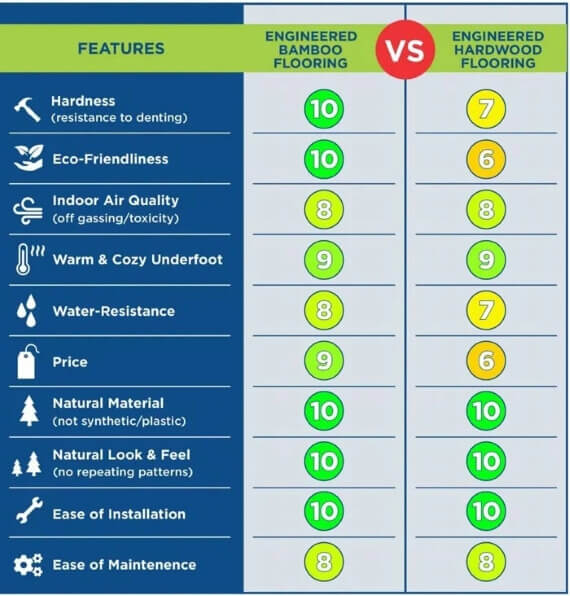
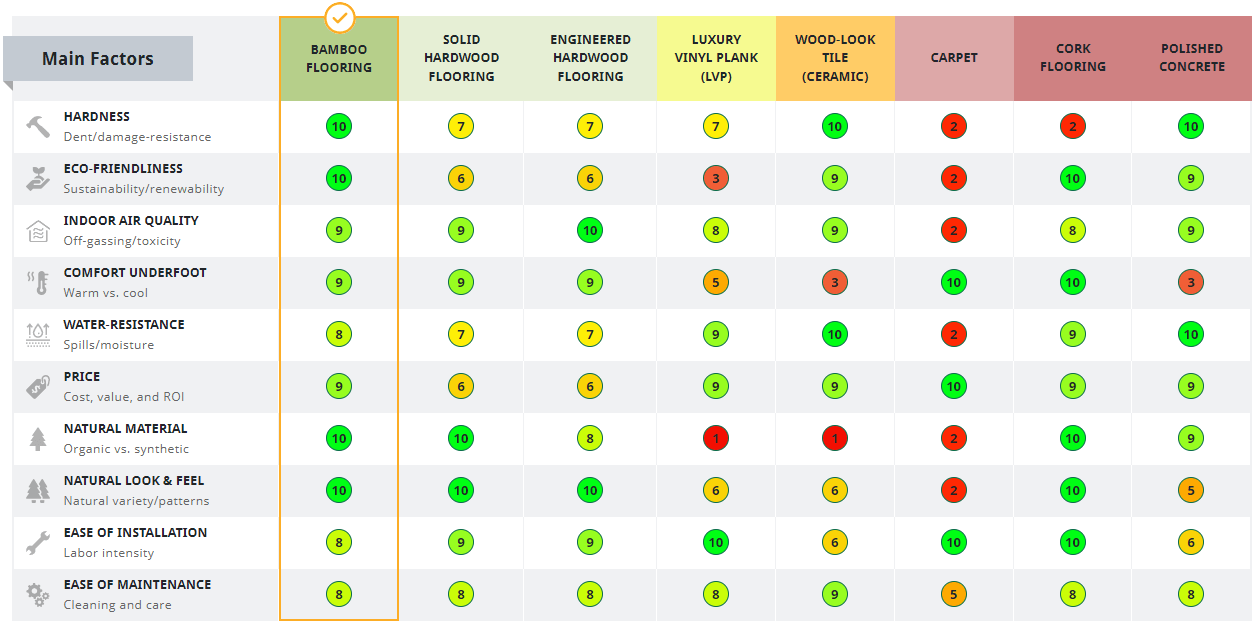
Selecting the right flooring for your home or your customers can be overwhelming, given the myriad of available options. To simplify your decision-making process, we've meticulously evaluated and compared the essential features of various flooring types.
Strand woven bamboo is considerably harder than any of its horizontal or vertical cousins and all conventional hardwood flooring — by far. This can be hard to believe because bamboo is actually a grass instead of wood. But experts classify it as hardwood flooring for a reason - because it is extremely hard and durable.
To make bamboo so tough, manufacturers weave long strips of raw bamboo together. (Hence the name "strand woven.") Then they expose these woven mats to high heat and machines fuse them together.
The resulting flooring planks rank much, much higher than any other hardwood flooring on the Janka Hardness Scale. So high that strand woven bamboo is way harder than even Brazilian Walnut (sometimes called Ipe), Ebony, and Bolivian Cherry.
Bamboo flooring is a superior choice for the environmentally conscious consumer. Unlike traditional hardwoods, bamboo is a rapidly renewable resource that reaches maturity in just a few years. This means that it can be harvested more frequently than hardwood trees, which can take decades to mature. Bamboo does not require replanting once harvested, as it regenerates on its own. The unique marble grain of strand bamboo and eucalyptus flooring is not only beautiful but also distinctive. Moreover, high-quality manufacturers, such as Ambient®, use eco-friendly and non-toxic finishes and adhesives in the manufacturing process, making it a healthier choice for both the environment and human health.
Bamboo is a rapidly-renewable resource because of how quickly it grows. Although there are many species of bamboo, all of them are evergreen and belong to the grass family Poaceae. The fastest-growing plant in the world, bamboo is used in a variety of ways. Sometimes people eat it, use it as paper, or make it into household products like cutting boards and kitchen cabinets.
To be sustainable, a product must:
Some smaller varieties of bamboo can grow an astounding three feet in only 24 hours. Incredible! The best kind for flooring is a "giant" variety called Moso bamboo. These amazing plants use energy from the sun to build massive root systems called rhizomes.
During the first four years, there's no evidence of this growth underground. New plants will break through a year later, though, growing at an explosive rate for about six weeks.
Native to China, Moso bamboo commonly grows to heights of 40-80 feet. The bamboo grows in clusters (groves), with taller plants emerging each generation.
The first generation of Moso bamboo plants will grow to about 10 feet tall. As this happens, the bamboo grove has more leaves pulling in energy from the sun, and the root system grows stronger. As a result, the batch of plants that push up the next spring can grow even taller!
Now the grove has even more leaves and the root system gains more strength and grows wider. The pattern of higher plants each spring continues for 8-10 years, at which point the grove reaches its maximum height.
Bamboo plants generally live about 10-15 years, depending on the variety. And, interestingly, the grove continues living even when a single plant dies or is cut down. It simply uses its energy to replace the plant.
Bamboo is naturally beautyful, durable, and renewable. On the downside, it require special sealants to protect it against water. Explore all the pros and cons of bamboo flooring in this article.
It definitely is! Bamboo is extremely eco-friendly. Find out all the details in this article and learn more about Ambient’s dedication to sustainability.
This fascinating article examines the environment and bamboo. It explores how bamboo is an environmental constant in the modern world, yet faces an uncertain future.
Absolutely not. Pandas have become endangered because of the fragmentation of their habitats due to human encroachment and hunting, not because of the use of bamboo for flooring.
There are many reasons why Moso is the top choice for flooring. For one, it produces the densest and hardest fibers of any other bamboo species. To find out the other reasons, check out this article!
Explore all the different types of woods used to make sustainable furniture. To be sustainable, the wood must last a long time and have little impact on the planet.
People use bamboo in so many different ways, from food to clothing to housing and more. Learn about them all in this interesting article!
As you read lots of bamboo flooring information online, you may come across poor reviews about bamboo. Some homeowners and installers have had bad experiences with low-quality brands. Here's where we set the record straight about common bamboo myths and misconceptions.
When bamboo flooring first came about in the mid-1990s, it had a bad reputation for being soft and vulnerable to scratches and dents. However, advances in manufacturing have brought forth certain types of bamboo that are more durable than the hardest traditional hardwoods. On the Janka hardness scale, strand bamboo has a rating of more than 4,000—harder than the strongest teak, cherry, rosewood, or walnut.
This usually happens when using poor-quality brands or when rooms have wildly varying humidity. In both cases, you'd have the same problem with hardwood floors. As with all floors common installation errors are easily avoided by taking 20 minutes to read the installation instructions.
It’s true that pandas do eat bamboo, but not the bamboo used to make our flooring. In fact, pandas don't even live in the areas where we harvest our Moso bamboo.
While it’s true that some products made in China are low-quality, there are also very high-quality products made in China, like iPhones, Mercedes, and all Ambient® products! Reputable suppliers carefully control the manufacturing process and supply chain, and enact strict quality control processes to ensure the products are superbly crafted and hyper durable.
Strand woven bamboo is virtually pet-claw proof from a "permanent denting" standpoint, as even the largest dogs can't apply enough force to leave permanent marks. This is precisely one of the main reasons why homeowners choose strand bamboo.
As for micro-scratches on the surface, there is no surface on earth (diamond floors, anyone?) that won't scratch when hit with something sharp enough, so no floor is scratch-proof. To minimize scratches from furniture and everyday activity, and keep your floors in tip-top shape, try these tips:
Bamboo can indeed be refinished, we even have a guide on how to do it: How to Refinish Bamboo Flooring. What you can't do to bamboo is stain it on site — but you can certainly sand it down and then add several clear coats of polyurethane. Also, if you take proper care of your floor it will last you decades, and if you purchase a high quality bamboo product, it's highly unlikely you will ever need to refinish it (under residential foot traffic) due to its insanely dense composition and resistance to moisture and high traffic.
Many hardwoods harvested in the Americas, Europe and even Asia are first shipped to China for milling and finishing, and then shipped back to retail locations around the world. That's two shipments compared to one (bamboo grown in China and shipped out from there). Also, due to its incredibly fast regrowth rate, bamboo forests generate orders of magnitude more biomass than their hardwood counterparts and take about 1/10 of the time on average to regrow for harvest. Additionally, when bamboo is harvested, the plant isn't killed, unlike trees used for wood. New growth emerges every spring. So continually harvesting bamboo is much better for the environment than waiting decades for hardwoods to grow and damaging the soil when cutting them down. For an in-depth read on how bamboo is eco-friendly, check out our article Examining the Effects of Hardwood, Cork and Bamboo Flooring on the Environment.
Just like traditional hardwood flooring, installers can nail, glue, or float bamboo. Want to read Ambient's official installation guide? We have both an English Version and a Spanish Version available for you!
Whether you're installing it yourself or have hired a professional, here are a few general tips:
There are 3 different ways to install a beautiful bamboo floor: nail, glue, and float. Each installation method has its own pros and cons.
You can avoid a lot of common bamboo flooring installation mistakes by simply learning what not to do in this guide.
Highly resistant to moisture and very hard, bamboo makes the best flooring for kitchens.
Yes! Concrete is an ideal base for bamboo flooring. In fact, homeowners can either glue or float bamboo flooring over concrete. Learn more in this article that also covers common installation errors.
Engineered bamboo is a great flooring choice for a basement. It is moisture-resistant and stable. It's also easy to install and replace. Find out more in this article that also covers common installation errors.
If you are nailing or gluing down your floor, then YES, you can install bamboo under your cabinets. If you are floating your floor, then NO, you cannot put it under your cabinets. Get more details in this informative article.
Bamboo is a great option for stairs. It provides a stylish, elegant look, is durable against high traffic and pet nails, and is easy to maintain.
Bamboo comes from the tropics (think hot and humid!) As a result, it's a great option for laundry room floors.
Most radiant heat systems operate at around 75 to 80 degrees. This temperature range is perfectly fine for bamboo, making it an excellent flooring option for this.
Yes and yes! Homeowners can install bamboo in all of the above, including dry, tropical, and desert-like areas. For more details, read this article, which also covers common installation errors.
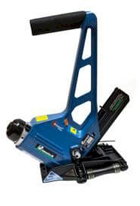
This guide describes how to install a bamboo floor by nailing it down. In fact, did you know that nail guns work with high-density strand bamboo even though it's denser than traditional hardwoods?
You can! Learn how to glue down bamboo flooring in this guide. The method varies depending on your subfloor material, so be sure to take a look!
Thinking of floating your bamboo floor? Note that your inside humidity should be within a 20% range year-round.
Installation typically costs between $2-$5 per square foot including labor and materials. However, if you exceed 2,000 square feet, installers may drop their price and give you a discount!
Consider adding approximately 7-10% to the actual square footage to account for cutting and waste.
It does. High-quality bamboo flooring usually requires at least 72 hours to acclimate, while lower quality brands typically require 1-2 weeks. Get more details here!
Some common causes of shrinkage include not acclimating the floor properly, choosing the wrong brand, and exceeding the maximum recommended runs.
If you want the installation process to go smoothly, you must think about your subfloor.
Sometimes dried adhesive ends up on the floor during installation. Not to worry! Follow the steps in this guide to easily remove it.
Wondering what adhesive you should use when installing your bamboo flooring? This article gives lots of recommendations.
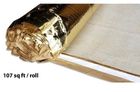
You will need underlayment if you are installing bamboo flooring via the nail down or floating method. However, you don't need underlayment if you are installing via the glue down method.
You’re probably wondering how to maintain your bamboo flooring so you can enjoy it for many years to come. The good news is that cleaning your flooring is pretty easy! However, there is more to it than just sweeping and mopping. Especially if you want to keep your bamboo looking its best. Check out our Cleaning & Care Guide for Bamboo Flooring to learn everything you need to know about proper flooring maintenance.
You will rarely have to worry about refinishing the bamboo floors in your house. But you CAN refinish them (solid strand and engineered) if needed!
Bamboo flooring is extremely resilient and hard wearing. You can still scratch or dent it, though, if you're not careful. Learn how to take care of it here!
There are several different ways you can fix scratches on your floor. Find out exactly how in this informative article!
Don't! Steam mops pump out lots of water vapor, which can cause the floor to swell or warp over time. Learn what you should use to clean it instead here.
Good question! If the humidity in a home fluctuates a lot, gaps can develop in the floor, causing the planks to move around. Hence, little noises and why it's important to control the humidity when you have bamboo floors.
We love our pets like family, but they can still cause a mess sometimes! Learn what to do if this happens on one of your beloved bamboo floors.
You might be wondering what type of pad or mat to put beneath your rugs to protect your bamboo floors. Get all the details in this helpful article!
It can be a challenge to ensure that the bamboo flooring you're getting is high-quality and eco-friendly. Unfortunately, as a newer flooring product, it isn't officially rated. So it can be hard at times to know what you're purchasing! The best approach is to work with a reputable dealer or manufacturer that has a proven track record.
Nowadays we need to be vigilant about what we eat, breathe, and touch. Chemicals are everywhere. When it comes to bamboo flooring, however, they are perfectly safe as long as test results show less than .05 ppm.
In fact, bamboo floors generally off-gas less than even your wood dining room table or office desk!
Having said that, trace amounts of phenol-formaldehyde resin and urea formaldehyde are used in the production of strand woven and engineered bamboo floors. Experts consider the flooring safe, however, because the amounts are so small.
It is important to recognize, though, that cheaper flooring by shady suppliers can give off formaldehyde emissions between .2 ppm and .3 ppm (parts per million). Higher quality flooring brands meet the very tough CARB Phase II, OSHA (Occupational Safety And Health Administration), and NAUF (No Added Urea Formaldehyde) standards. European and American Indoor Air Quality recommendations allow for .1 ppm and below.
For more information about formaldehyde, please visit our Bamboo Flooring and Formaldehyde information page.
Many factors impact the price of bamboo floors, including the size of the installation area, bamboo type, quality, brand, and labor costs. As of our latest udpate, bamboo costs about $3 to $6 per square foot on average. In comparison, hardwood flooring typically costs $4 to $8 per square foot for standard materials like hard maple or red oak. More unusual hardwoods can cost upwards of $10 per square foot. Use our handy Square Footage Calculator to calculate the square footage of your room.
There are some other aspects that can affect the cost of installing bamboo floors. These can include supplier cost differences; the cost of subfloor installation, preparation, or floor removal; molding and baseboard repair or replacement; and staining and finishes.
No. Stain isn't the reason it's darker. Instead, the raw bamboo has undergone a special process of kiln-heating. This carbonization process darkens the natural sugars found in the plant, giving the finished planks a darker color. This color goes all the way through the plank, just like natural bamboo.
A common misconception is that this process softens the bamboo. This isn't true in regards to strand woven bamboo, however, and only applies to old "classic" bamboo (horizonal and vertical grains). Classic bamboo is only about 1/3rd the hardness of strand woven bamboo.
Yes, but we suggest using only engineered bamboo flooring for floating installations. Why? Because floating solid wood or bamboo products can result in problematic expansion and contraction.
For ease of installation, use click-lock planks that fit together and “snap” into place. This type of installation is incredibly easy because it doesn't require any glue or nails. Even brand-new installers can usually do this without any problem.
Bamboo holds up incredibly well in most moist conditions. (Within reason! Don't dump buckets of water on your floor and let it sit there.) Since bamboo is actually grass and not hardwood, it tends to tolerate moisture well.
In fact, we have installed our floors in humid climates all over the world. Examples include Guam, Kenya, Hawaii and all across the Southern US. Even the Dry Tortugas National Park off the coast of Miami!
That being said, you should follow NWFA guidelines regarding humidity levels inside the home. Most importantly, as with any wood floor, avoid swings of more than 20% in humidity throughout the year. Also, be sure to acclimate your flooring for at least 72 hours. Lay it flat on the floor in the room where it will be installed with the boxes and plastic cut open.
Absolutely! In fact, due to its hardness and moisture resistance, strand bamboo is great for kitchens, laundry rooms, and even basements. In fact, we've installed our floors in many kitchens throughout the world. We've also installed it in restaurants, spas, yoga studios, university dorms, lecture halls, and many other high-traffic locations.
Additionally, with Ambient®'s floors you get our super-tough Accuseal Ultra® finish with aluminum oxide. This provides top-notch spill protection from puddles and stains.
Yes! You can install bamboo over concrete in two ways. You can either float it or glue it down.
If you choose to glue it to concrete, use an all-in-one/vapor barrier adhesive, compatible trowel, and adhesive remover wipes for cleanup. If you float the flooring over concrete, use a 3-in-1 vapor barrier underlayment. For more details, check out our bamboo flooring installation page.
We recommend adding 10% for cutting and waste. But this can vary slightly depending on your skill level and the layout of your room. If installing the flooring in a diagonal pattern, you'll need to add 15%.
There are 10 main bamboo moldings that you may need to use depending on your particular installation. We list them below:
Yes! You can install bamboo flooring in a bathroom, as long as you take care to protect it from moisture. For example, use mats by the bathtub and shower entrances. As long as you're careful not to let the water sit, bamboo floors work great in bathrooms.
The best time of year to install both bamboo and hardwood flooring is during the spring and fall. Although you can install them any time of the year, the less humid and cooler months work best.
It tends to be more humid in the summer. If the flooring absorbs too much of this moisture, the wood will swell. Conversely, during the dry months (winter), the flooring may shrink and gap. If proper expansion gaps haven't been put into place, this can cause buckling issues.
Absolutely! In fact, due to its hardness, bamboo is much more suitable than traditional hardwoods to handle light commercial foot traffic.
Bamboo floors are commonly used in:
You can find Ambient® bamboo in Elevation Burger locations worldwide and even in university student unions and restaurants.
The carbonization process only softens "classic" bamboo (vertical or horizontal) — not strand woven bamboo. This is because the carbonized color is the same hardness as the natural color of strand woven bamboo - the raw materials are compressed to the same density. Hence, there is no real difference between carbonized and natural strand when it comes to hardness.
In general, you can clean your floors with a Swiffer or any type of lightly damp mop. Do try to treat your floors similarly to hardwoods, and avoid leaving excessive moisture on the floor while cleaning. For more information, check out our handy cleaning guide.
Here are some tips on how to clean your floors:
When you think of the bamboo plant, you probably think of bamboo forests in Southeast Asia. Wild pandas may also come to mind. However, most of the world's rapidly-regenerating bamboo grows in China. The soil conditions and climate are ideal for it there.
Moso bamboo, used for flooring, is not the kind of bamboo that pandas like. Nor do they rely on this bamboo to feed themselves. In reality, Moso is primarily used for flooring. People typically harvest, mill, and manufacture it close to the forest where it actually grows.
Yes! In fact it qualifies for LEED credits under multiple categories. Check out our guide to Bamboo Flooring and LEED Credits
Although "better" is often subjective, bamboo does have some advantages over traditional hardwood. Here's a quick look at what the two popular types of flooring have in common and how they differ.
The Similarities:For a more comprehensive write-up, be sure to read our Bamboo vs Hardwood Floors Side-by-Side Comparison.
Both are made from a hygroscopic material. This means that they tend to absorb moisture from the air. This diagram clears up any confusion about how and why expansion and contraction occur (hint: it's all about the humidity!):
There are steps you should take before, during, and after installation to prevent expansion and contraction issues. For example, be sure to acclimate your floors properly. Additionally, install them with expansion gaps as needed. And keep the humidity levels in your home stable.
Also, it’s advisable to use engineered bamboo if you live in an area where humidity levels fluctuate throughout the year.
Aside from diamonds, almost no material in existence is 100% scratch-proof. Hence, all floors are susceptible to scratching. Especially when they come into contact with heavy furniture or sharp objects.
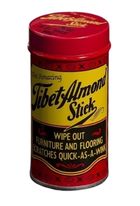
These scratches aren't as visible on white bamboo hardwood flooring as they are on darker woods. Fortunately, homeowners can easily fix micro-surface scratches. They can do this either naturally by friction (foot traffic) or with a flooring product like the Tibet Almond Stick.
When it comes to denting, however, strand woven bamboo really stands out. It is extremely hard and dense. It's nearly impossible to permanently damage it outside of using excessive force.
Don't believe us? Grab a free flooring sample and go at it with a hammer. Then you'll see why so many pet owners choose stranded bamboo. It stands up to it all!
Yes! However, in this case, it's important to keep the humidity between 40-60% or your flooring might have issues. If the humidity is too low, shrinkage or cracks might occur. If it's too high, the bamboo might expand and later buckle.
Manufacturers usually finish bamboo with several layers of UV protection. However, over time sunlight can cause most flooring to fade. But there are ways to protect it. Some options include using drapes, blinds, or UV films on your windows.
Keep in mind that in sunrooms and atriums - rooms purposefully filled with light - it might not be possible to protect your flooring without using UV films.
Despite all its benefits, sunlight can harm both skin and building materials. Constant and direct sunlight (especially from southerly-facing windows in the U.S.) can fade almost any product in your home. This includes furniture, carpets, paint, electronics, plastics, and more.
We've made it easy for you to compare all the important features of the floors you're considering, from pricing and shipping to warranty and indoor air quality. You can even compare hardness ratings and other key features side-by-side. So don't wait, download our handy-dandy cheatsheet today and make the flooring selection process a breeze.
Download Cheat Sheet PDF
Sign up for our newsletter to get the best deals on all of our products!
Loading chat window...